The Kingdom is God's - Monday, 08/03/2026

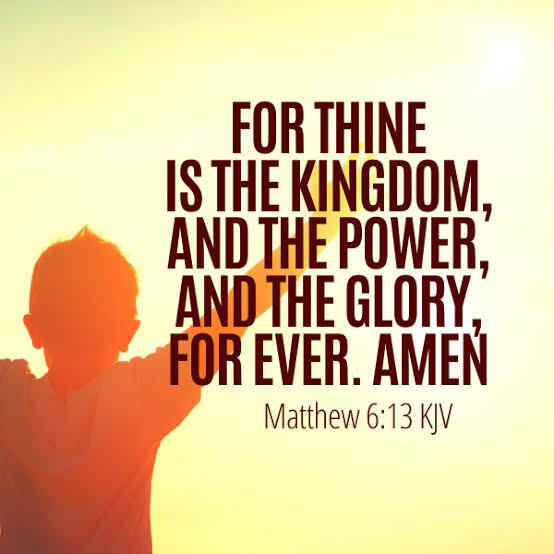
The Kingdom Is God’s
Scripture
The Lord’s Prayer ends by turning our attention back to God:
“For thine is the kingdom.”
Not mine.
Not ours.
God’s.
That distinction matters because we are all tempted to build little kingdoms of our own. We want life arranged around our preferences. We want control over outcomes, people, schedules, and circumstances. We want our plans to succeed and our opinions to prevail.
Even our prayers can become attempts to recruit God into supporting the kingdom we are trying to build.
But Psalm 145 describes a kingdom that belongs entirely to God—a kingdom marked by grace, mercy, patience, faithfulness, and enduring love. God’s reign is not built on ego, fear, or domination. It reflects God’s generous character.
Praying “Thine is the kingdom” is an act of surrender.
It means:
God, this life belongs to you.
This church belongs to you.
This world belongs to you.
The future belongs to you.
I do not have to make everything turn out according to my plan.
That does not make us passive. It frees us to serve faithfully without pretending everything depends on us.
God’s kingdom is larger than our success, stronger than our failure, and more enduring than anything we can build for ourselves.
Practice
Notice one area where you are trying to control the outcome.
Open your hands and pray:
“God, this belongs to your kingdom, not mine. Show me the faithful part that belongs to me, and help me release the rest.”
Prayer
God of an everlasting kingdom,
free me from the need to control everything. Align my plans with your purposes and my heart with your gracious way. Help me do what is mine to do and trust you with what is not. For the kingdom is yours. Amen.